Kite Surfing: The Complete Beginner’s Guide to Kitesurfing
Kite surfing is one of the most exciting things you can do on the water, and one of the most misunderstood. It looks extreme from the beach, yet most people who take proper lessons are riding within a week. This guide covers what kite surfing actually is, how the kite produces power, what conditions you need, how long it takes to learn and how to get started without wasting money or putting yourself at risk.
What is kite surfing?
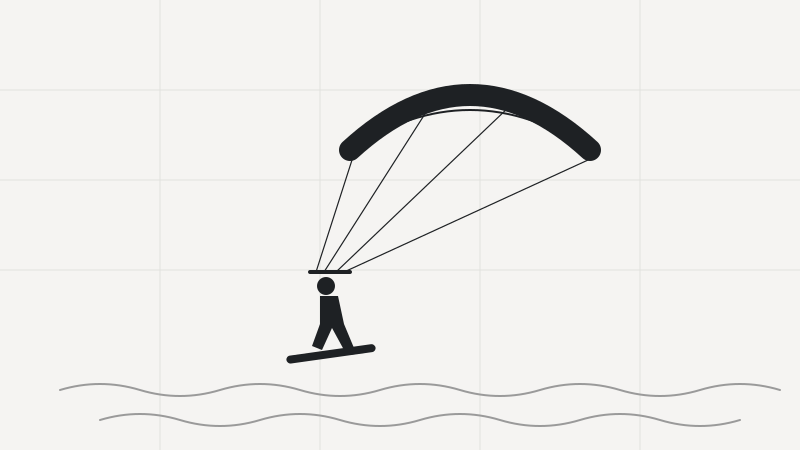
Kite surfing (also written kitesurfing or simply kitesurf) is a water sport where you stand on a small board while a large, steerable kite pulls you across the water. You're connected to the kite with a control bar and four or five lines, and the bar is hooked into a harness around your waist or hips. That harness is the key detail: the pull goes through your body's center, not your arms, so you don't need to be especially strong.
Once you can ride, the same kite that pulls you along lets you go upwind, carve turns, ride waves and jump far higher than a board alone ever could. The whole setup packs into one bag, works on lakes, lagoons and the ocean, and doesn't need a boat or a lift. That's a big part of why the sport keeps growing.
Kite surfing, kitesurfing or kiteboarding?
They're the same sport. Kiteboarding is the more common word in North America, while kitesurfing and kitesurf dominate in Europe and at most kite destinations. Some riders use "kitesurfing" specifically for riding a directional surfboard in waves and "kiteboarding" for riding a twin-tip board, but in everyday use the words are interchangeable. If you search for lessons, gear or spots, it's worth trying both.
How does kite surfing work?
The wind window
Imagine a quarter of a sphere downwind of you, like a giant dome with you standing at the center of its flat edge. That's the wind window, and your kite can only fly inside it. At the edges of the window (far left, far right and directly overhead) the kite produces very little pull. That's where you park it to rest, launch and land.
Through the middle of the window, low and in front of you, is the power zone. A kite moving through the power zone pulls hard. Steering the kite up and down through this zone, a move called "diving" or "sine-waving" the kite, is how you generate speed when the wind is light or when you're getting up on the board.
Power and depower
The control bar slides on the center lines. Pull the bar toward you and the kite's angle to the wind increases, which gives you more power. Push it away and the kite flattens out and loses power. This is called sheeting in and out, and it's your main throttle.
Every modern kite also has a quick-release safety system. Pull it and the kite flags out on a single line and loses almost all of its power. Learning to use it automatically is one of the first things any good school will teach you.
Edging and riding upwind
The kite pulls you downwind. The board's edge resists that pull. By leaning back against the kite and digging your heel-side edge into the water, you can ride across the wind instead of being dragged with it. Point the board slightly into the wind and you can even work your way back upwind, which is the skill that separates beginners from independent riders.
How long does it take to learn kitesurfing?
Most people need around 9 to 12 hours of lessons to get up on the board and ride short distances. Riding consistently upwind usually takes a few more sessions on your own, ideally at a spot with rescue cover or under a school's supervision.
Things that make you learn faster:
- Steady wind. Consistent 14 to 18 knots is far easier than gusty conditions.
- Flat, shallow water. Standing depth lets you reset quickly instead of swimming after your board.
- A board sports background. Wakeboarding, snowboarding and surfing all help with stance and edging.
- Concentrated time. A week-long course in a reliable wind destination beats one lesson a month.
Age and fitness matter less than people think. Plenty of riders start in their 40s and 50s. For a breakdown of what each lesson covers and what it costs, see our guide to kiteboarding lessons.
What wind do you need for kite surfing?
- Roughly 12 to 20 knots of steady wind is the sweet spot for learning on a standard kite.
- Below about 10 knots you'll need a very large kite, a big board or a hydrofoil.
- Above about 25 knots, especially when it's gusty, is best left to experienced riders.
Wind direction matters more than wind speed
- Side-shore: the wind blows along the beach. This is the best and safest direction, because you ride parallel to the shore.
- Side-onshore: the wind blows at an angle toward the beach. Also good for learning, because if anything goes wrong you drift back toward land.
- Onshore: the wind blows straight at the beach. You won't drift out to sea, but it's hard to get away from the shore and easy to be dragged onto land.
- Offshore: the wind blows from the land out to sea. Never kite in offshore wind as a beginner. If you get into trouble, you drift away from land.
Gusts
A steady 15 knots is easy. Wind that jumps between 10 and 22 knots is hard work even for experienced riders, because the kite's power changes constantly. When you check a forecast, look at the gust number, not just the average.
Is kite surfing dangerous?
Kite surfing is safe when you learn it properly and unforgiving when you don't. Most accidents happen on land or close to the beach, during launching and landing, or in gusty and onshore conditions. Very few happen out on open water. The basic rules:
- Take lessons from a certified school. IKO and VDWS are the most widespread certifications.
- Never kite in offshore wind unless there's a rescue boat on the water.
- Keep clear space downwind. Allow at least two line lengths, roughly 50 meters, between you and anything hard: people, rocks, cars, trees, power lines.
- Check your quick release before every session, and practice using it.
- Wear a helmet and an impact vest while you're learning.
- Don't ride alone. Tell someone where you are and when you'll be back.
- Watch the sky. Squalls and thunderstorms can bring sudden, violent gusts. If one is coming, get off the water.
What gear do you need?
A complete kite surfing setup has four core parts: a kite, a control bar with lines, a board and a harness. On top of that you'll want a wetsuit for your water temperature, a helmet, an impact vest and a pump.
Don't buy anything before your lessons. Schools provide all the gear, and you'll learn which kite sizes and board shapes suit you. When you're ready to buy, last season's models are often 30 to 50 percent cheaper than this year's and perform almost identically. Our kitesurfing equipment guide covers each piece of gear and what it costs, and the deals page lists the biggest current discounts by category.
How much does kite surfing cost?
- Lessons: a full beginner course commonly costs from a few hundred to around a thousand dollars or euros, depending on the country and the lesson format.
- A new setup: expect roughly $2,000 to $4,000 for one kite, bar, board and harness bought new, and much less for used or previous-season gear.
- After that: wind is free. Apart from maintenance and the occasional repair, kite surfing is cheap to keep doing.
How to start kite surfing, step by step
- Fly a trainer kite. A small two-line trainer kite on the beach teaches you the wind window and steering before you ever touch the water.
- Book a beginner course at a certified school, ideally at a spot with flat, shallow water and steady side-shore wind.
- Do your hours in a block. Several days in a row beats spreading lessons over months.
- Rent or ride supervised after your course until you can reliably get back upwind.
- Buy your first setup. Start with one versatile freeride kite in the size you'll use most, a forgiving twin-tip and a comfortable harness.
Kite surfing FAQ
Can you learn kite surfing without lessons?
You shouldn't. A kite in 20 knots of wind can generate enough force to drag or lift an adult, and the mistakes beginners make (launching in the power zone, kiting in offshore wind, not knowing how to depower) are exactly the ones that cause serious injuries. Lessons are the fastest and the safest way in.
Do you need to be strong to kitesurf?
No. The harness carries the kite's pull, and good technique matters far more than strength. Many lightweight riders kite all day with less effort than heavier, stronger beginners who fight the kite with their arms.
Do you need to be a good swimmer?
You should be comfortable in deep water and able to swim a few hundred meters. You'll spend time in the water while learning, and self-rescue is part of every beginner course. An impact vest adds buoyancy, but it's not a life jacket.
What's the best age to start kite surfing?
Kids can start from around 10 to 12 years old, depending on their weight and the school's policy. There's no upper limit. Plenty of people learn in their 50s and 60s.